The Real Risk of Skipping Professional Business Headshots
Risk = Probability x Consequence
In business, most people think about financial risk, legal risk, or market risk. But there's another kind of risk hiding in plain sight: the risk of being judged before you ever open your mouth.
Your headshot isn't just a photo. It's a long-term business investment that either opens doors or quietly closes them.
And here's the truth: you don't get a second chance at a first impression. You get 100 milliseconds.
The Science of the Split-Second Judgment
Research from Princeton University found that people form accurate impressions of trustworthiness and competence in less than one-tenth of a second.
One-tenth of a second.
That's faster than you can blink. Faster than you can say your name. And it happens every single time someone sees your photo on LinkedIn, your company website, or a conference roster.
This isn't about being shallow. It's about how our brains are wired. We're pattern-matching machines. We assess threat, trust, and capability instantly because for thousands of years, that's what kept us alive.
The problem? Most people treat their headshot like a fun weekend project instead of what it actually is: the front door to every business relationship you'll ever build.
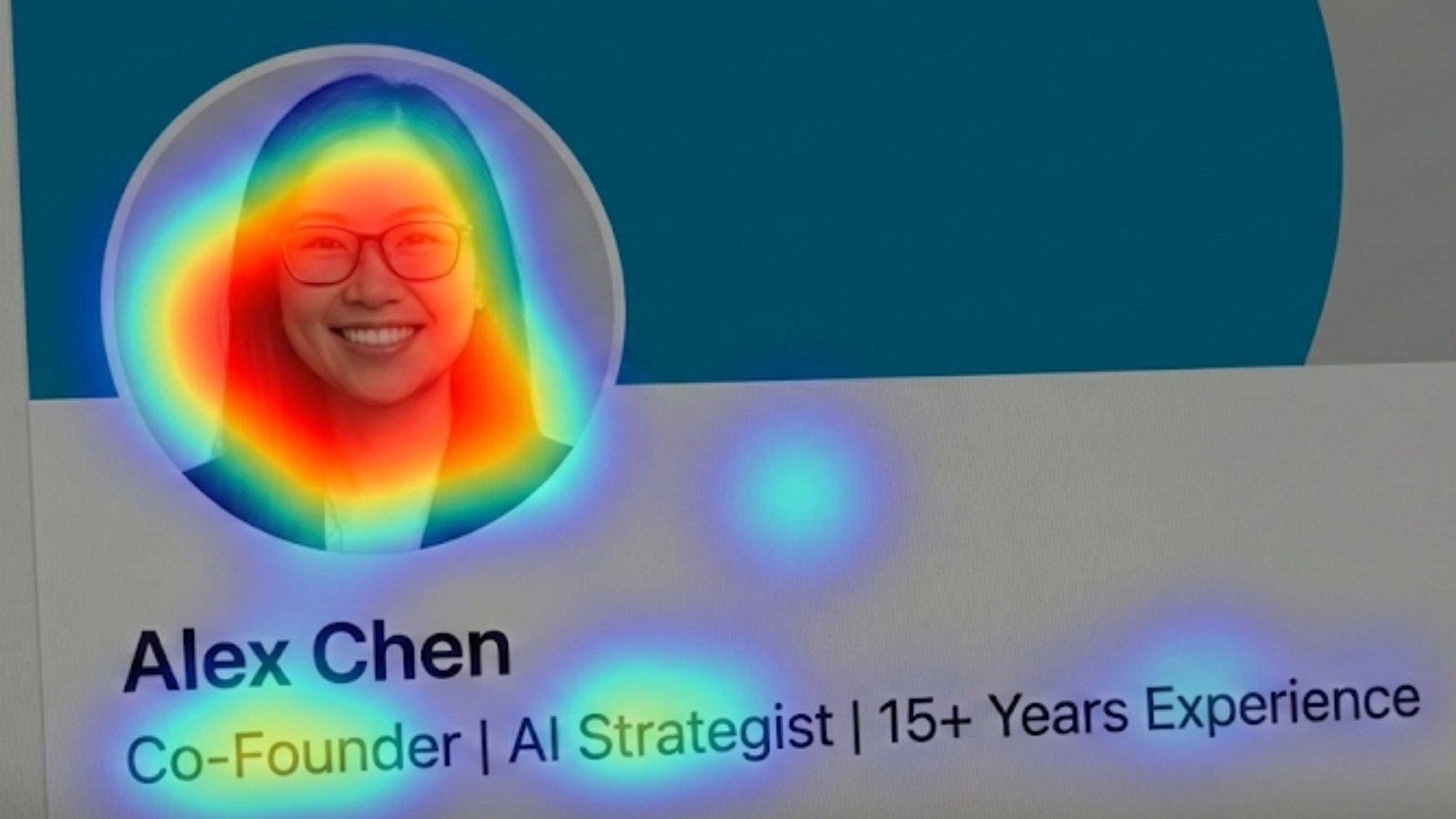
Where viewers look first on a LinkedIn profile
(Spoiler: it’s your face, not your credentials)
Why an Old Photo Creates a Lack of Trust
You've seen it before. You meet someone in person, and they look nothing like their photo.
Maybe it's five years old. Maybe ten. Maybe it's from a wedding where they cropped out the bride.
What happens in your brain when there's a mismatch? Immediate distrust.
Not because they're dishonest people. But because your brain registers inconsistency as a red flag. If they're not accurate about something as simple as their appearance, what else might be off?
This is what I call the trust deficit. You're starting the relationship at a disadvantage before you've said a single word.
And in the fast-paced NJ/NYC Metro business environment, you can't afford to start behind.
Your headshot has one job: to make the in-person meeting feel like a continuation of a relationship that already started online. Not a surprise reveal.
The Digital Handshake: Winning Before You Speak
Let's talk about what actually happens when someone sees your professional business headshot.
They're not just looking at your face. They're asking two questions simultaneously:
Do I trust this person? (Warmth)
Can this person deliver? (Competence)
These aren't conscious thoughts. They happen in the background, automatically, in those first 100 milliseconds.
And here's the engineering problem: you need both at the same time.
Too much warmth without competence, and you look friendly but unqualified. Too much competence without warmth, and you look cold or unapproachable.
The solution isn't luck. It's not about being "naturally photogenic." It's about having a step-by-step plan that controls the moving parts.
That means:
The right lighting to create clarity and focus
Natural posture that doesn't feel stiff or forced
Instant feedback so you see what's working in real time
A professional who knows how to guide your movements so you feel comfortable instead of awkward
This is why Eclipse Headshots exists. Because a headshot isn't just art. It's a business tool with measurable ROI.
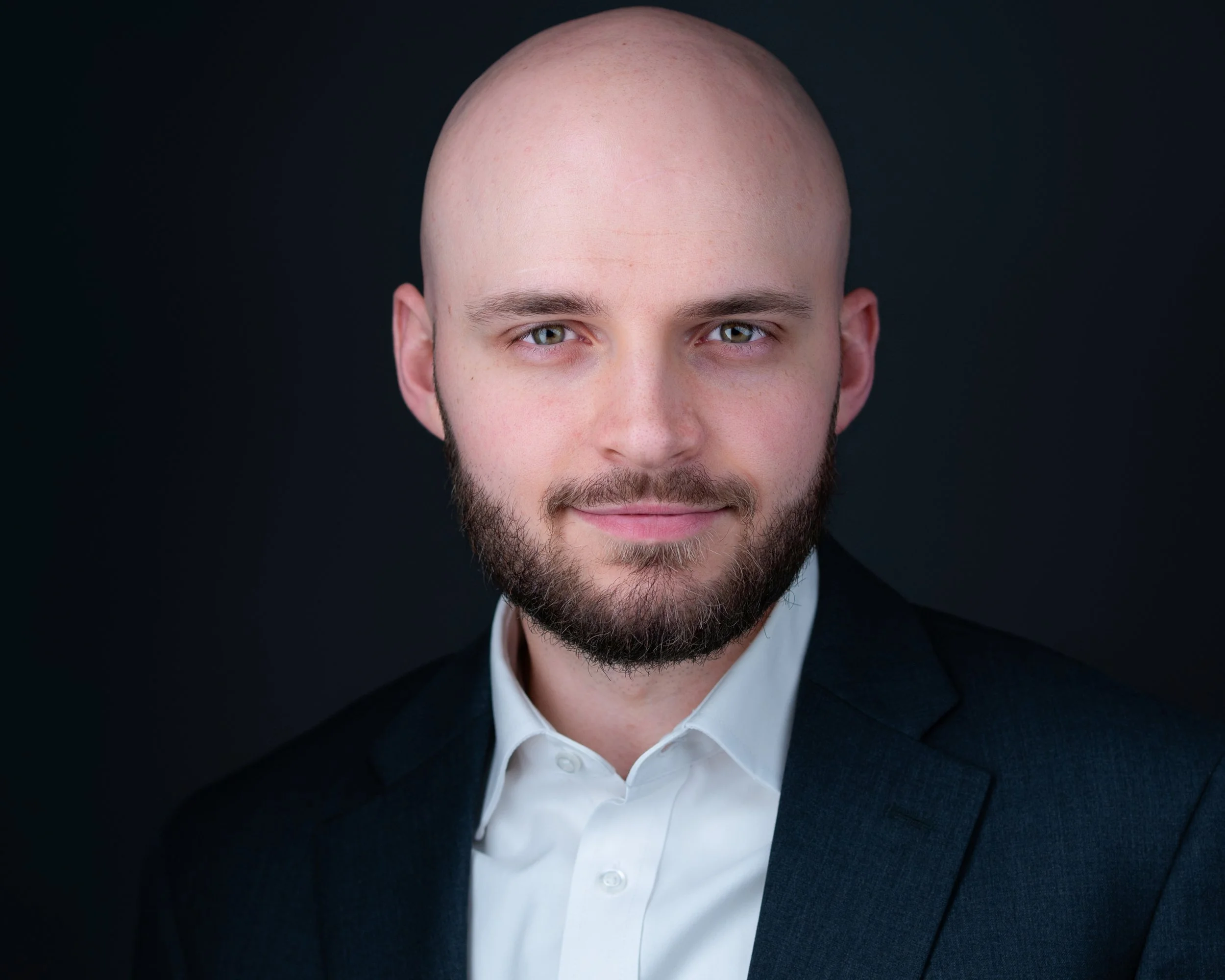
The "Unphotogenic" Myth: Why Bad Photos Aren't Your Fault
Here's something most people believe: "I'm just not photogenic."
Let me be direct: that's not true.
Being photogenic isn't a natural talent you're born with. It's the result of two things:
Feeling comfortable in front of the camera
Having a professional who knows how to guide you
If a photo looks bad, it's a failure of the process, not the person.
Think about it. Have you ever seen a celebrity or executive who looks terrible in every professional photo? No. Because they're working with people who understand how to set things up correctly.
The difference between a good headshot and a bad one isn't your face. It's the system.
At Eclipse Headshots, I don't believe in "difficult clients" or "unphotogenic people." I believe in fine-tuning the process until the final result matches who you actually are.
That means:
Adjusting the lighting for your specific skin tone and features
Finding angles that feel natural instead of forced
Coaching you through small adjustments in real time
Creating an environment where you're not performing, you're just being yourself at your best
Because here's the thing: you're not supposed to "act photogenic." You're supposed to look like the competent, trustworthy professional you already are.
When the process works, you don't think about the camera. You're not stuck in your head wondering if you look weird. You're just present.
And that's when the magic happens.
The ROI of Getting This Right
Let's talk numbers, because this is a business decision.
LinkedIn profiles with professional photos get 21x more profile views and 36x more messages than profiles without them.
That's not a small edge. That's an unfair advantage.
But it's bigger than LinkedIn. Your headshot shows up everywhere:
Your company website
Conference speaker bios
Email signatures
Proposals and pitch decks
Press releases
Virtual meeting profiles
Every single one of those touchpoints is either building trust or creating a trust deficit.
And unlike most marketing expenses, a great headshot is an investment that keeps working for years.
You're not paying for a photo. You're paying for the doors that photo opens. The meetings it secures. The clients who choose you instead of a competitor because you looked like someone they could trust.
That's leverage.
Your Next Move: The Visual Audit
Here's what I recommend.
Before you book anything, start with a Visual Audit. It's a 15-minute conversation where we look at your current headshot (or lack of one) and map out exactly what's missing.
No pressure. No sales pitch. Just a clear-eyed assessment of where you are and what it's costing you.
Because here's the truth: you can't afford to leave first impressions to chance in the NJ/NYC business environment.
You're competing with people who understand that image isn't vanity. It's strategy.
The question isn't whether you need a professional business headshot. The question is how much longer you're willing to operate without one.
Jon Larrazabal
The Headshot Engineer
Eclipse Headshots
Making first impressions an unfair advantage